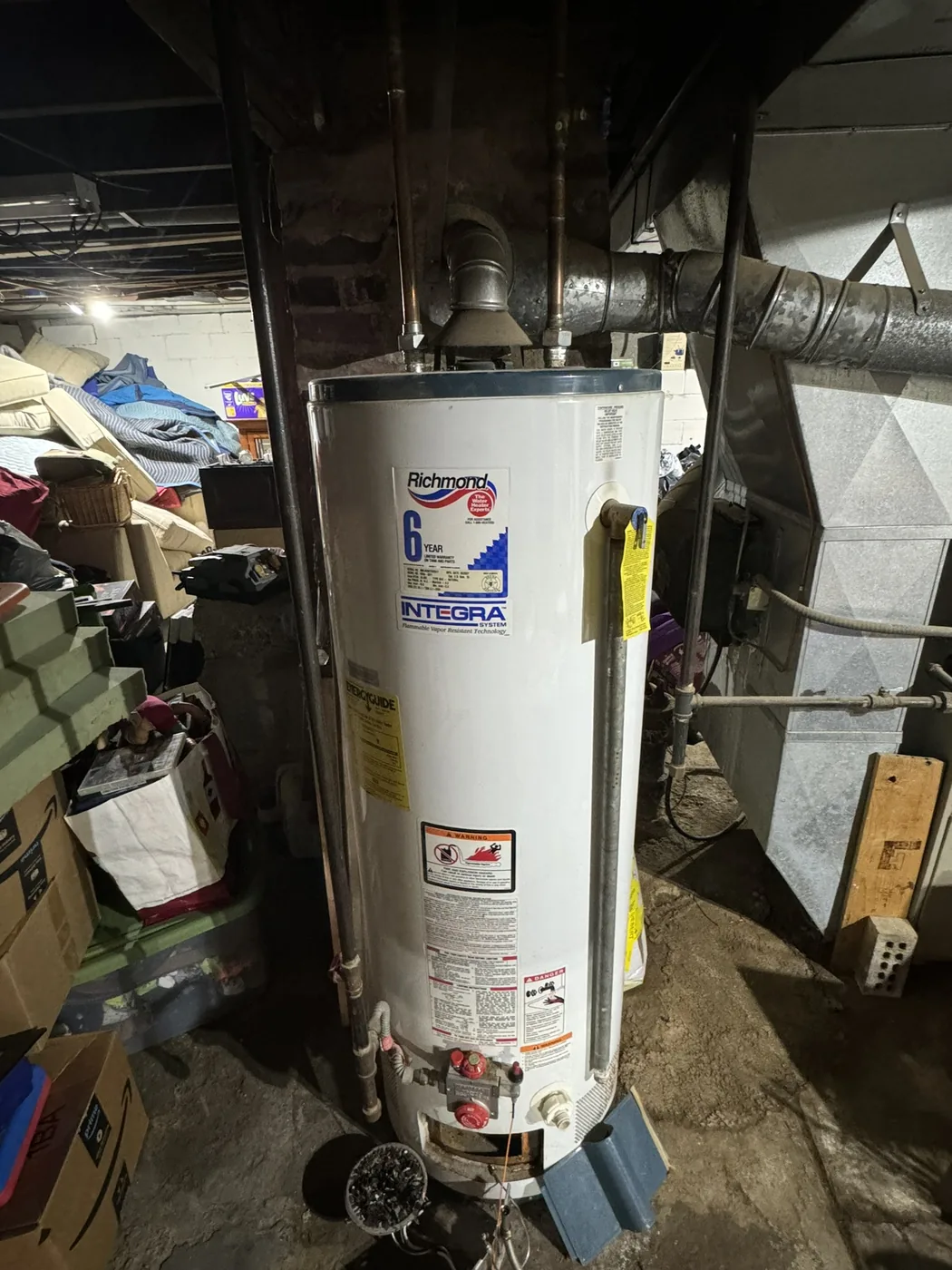
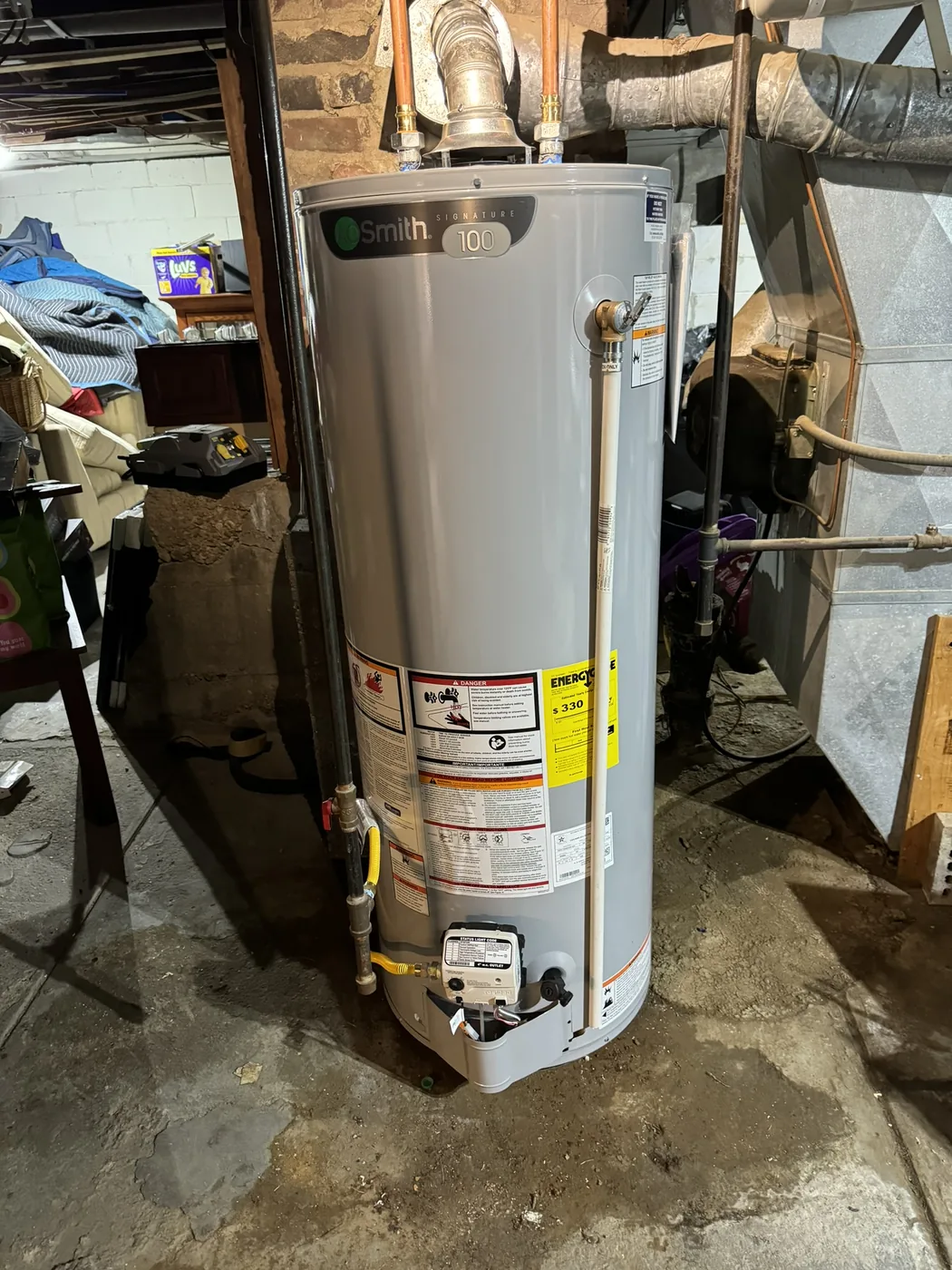
Hot Water Problems Are Never Convenient
If you found water around the base of your water heater, ran out of hot water in the middle of a shower, or woke up to no hot water at all, the first question is usually simple: can this be repaired, or do I need a new water heater?
The answer depends on what is actually wrong. Some water heaters only need a repair. Others have reached the end of their life and need to be replaced. My job is not to sell you something you do not need. It is to diagnose the problem, explain your options, and help you make a good decision for your home.
Brian’s approach: If a repair makes sense, I’ll tell you. If replacement is the better investment, I’ll explain why before you spend the money.
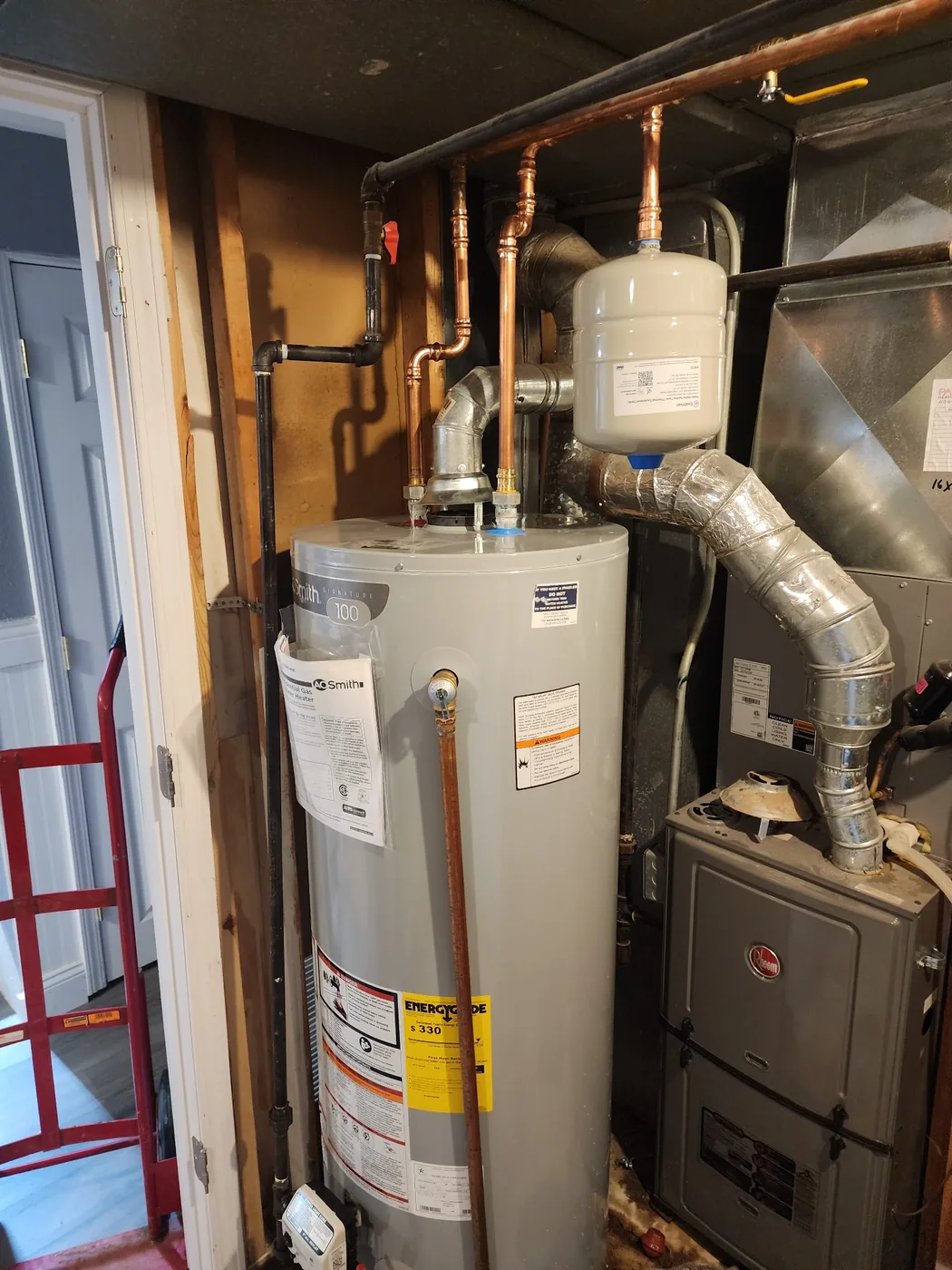
Do You Need a Water Heater Repair or Replacement?
Not every water heater problem means the whole unit is bad. If the tank itself is still solid, many issues can be repaired.
- Heating elements and thermostats
- Gas control valves, thermocouples, and pilot assemblies
- Expansion tanks
- Temperature and pressure relief valves
- Leaking shutoff valves
- Water line repairs near the heater
If the steel tank itself is leaking, replacement is the only permanent solution. Once the tank starts rusting through, there is no real repair that will stop it. That is different from a leak at a fitting, valve, or nearby pipe, which may still be repairable.
Types of Water Heaters I Install
Different homes need different water heaters. The right choice depends on fuel type, venting, family size, water quality, installation space, and budget.
Electric Water Heaters
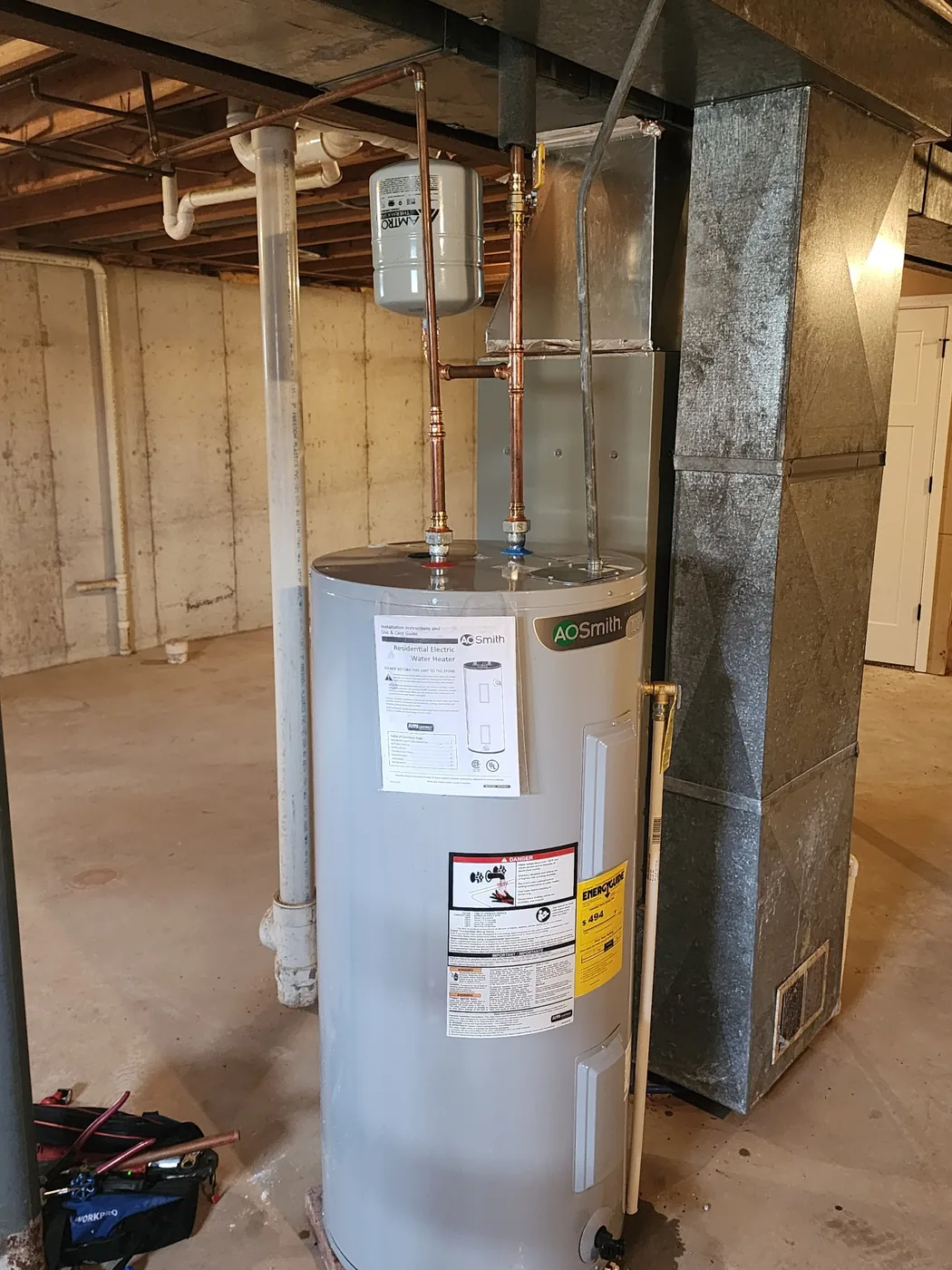
Electric water heaters are dependable and common in homes without gas or propane. Many electric problems are related to elements, thermostats, or wiring. If replacement is needed, a standard electric water heater is usually a straightforward installation.
Natural Gas Water Heaters
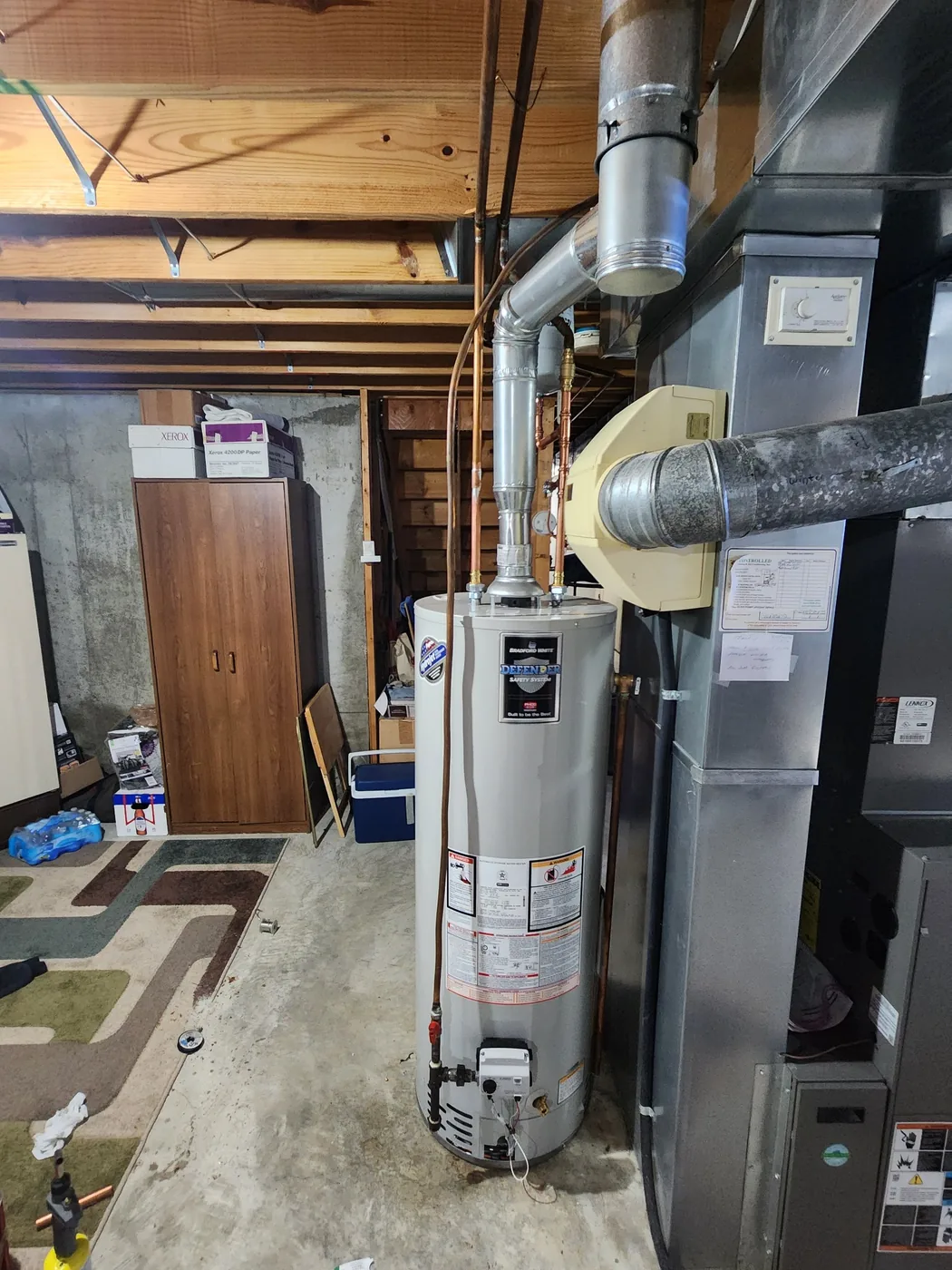
Natural gas water heaters recover faster than many electric units, but venting matters. A gas water heater has to safely remove combustion gases from the home. If the venting is wrong, the installation is wrong.
Propane Water Heaters
Many homes outside city limits use propane instead of natural gas. Propane water heaters operate similarly to natural gas models, but they must be set up for the correct fuel with proper gas connections and safe venting.
Power-Vent Water Heaters
Some homes cannot safely use a traditional atmospheric vent. If the water heater vents horizontally through an outside wall, or the home does not have an approved vertical venting system, a power-vent water heater may be required.
Power-vent water heaters use a blower to push exhaust gases outside through approved vent piping. The manufacturer’s venting instructions matter — pipe size, fittings, slope, termination, and total vent length all have to be considered.
Hybrid Heat Pump Water Heaters
Hybrid water heaters can be a great option in the right home. Instead of making heat directly like a standard electric tank, they move heat from the surrounding air into the water. That can make them much more efficient.
Before recommending a hybrid, I look at the installation space, ceiling height, room temperature, noise, condensate drainage, electrical requirements, and your family’s hot water needs. Sometimes a hybrid is an excellent investment. Other times, a standard electric water heater makes more sense.
Important: Posey Family Plumbing focuses on tank-style water heaters. I do not install tankless water heaters.
How Long Should a Water Heater Last?
A lot of national websites give broad numbers, but around our area I look at water quality first.
In homes without a water softener, I commonly see tank water heaters last around 6 to 8 years, especially where the water is hard. Homes with a properly working water softener often get around 10 to 12 years, and sometimes longer.
Hard water is one of the biggest reasons water heaters fail early. Minerals settle in the bottom of the tank, making the heater work harder and shortening its life. Soft water does not guarantee a water heater will last forever, but it can make a real difference.
For more on this, read about water softeners and water treatment.
Why Water Heaters Fail
Most people think water heaters simply wear out. Sometimes they do. But a lot of failures have another problem contributing to them.
- Hard water and sediment buildup
- Excessive water pressure
- A failed pressure reducing valve
- A missing or failed thermal expansion tank
- Improper venting on gas or propane units
- Poor installation practices
- Age and normal corrosion
Brian’s professional advice: I always want to know why the old water heater failed. If the real problem is high water pressure or a failed expansion tank, simply installing a new tank does not solve the whole problem.
Expansion Tanks and Water Pressure Matter
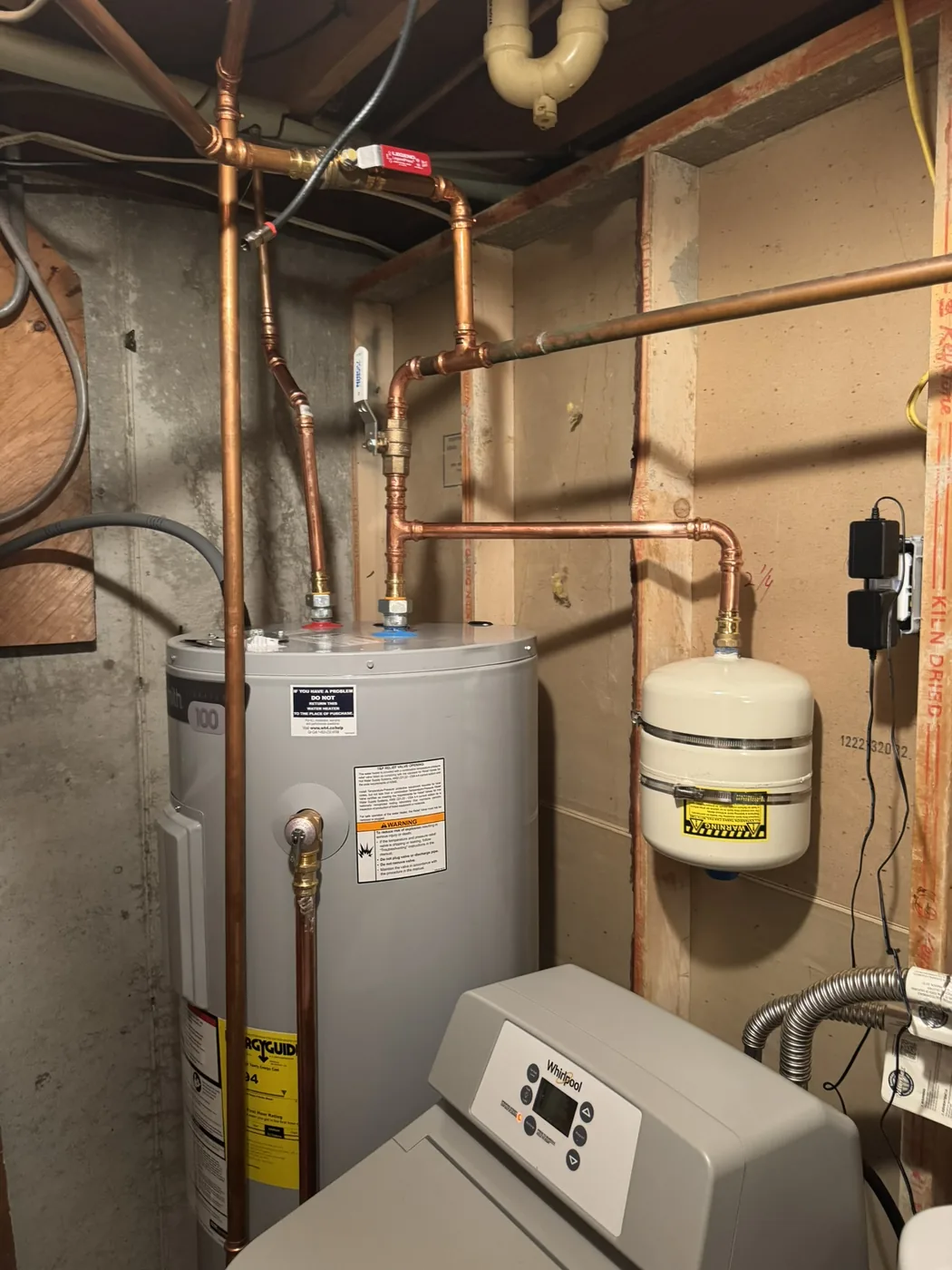
Water expands when it is heated. In many homes, especially homes with a pressure reducing valve or check valve, that expansion needs somewhere to go. That is where a properly sized and properly charged expansion tank comes in.
I also check water pressure because high pressure can quietly damage the entire plumbing system. I have seen homes well over 100 PSI because the PRV failed. That kind of pressure can shorten the life of a water heater, damage fixtures, and create problems throughout the house.
You can also read more about water pressure problems and why high water pressure matters.
Thermostatic Mixing Valves
Most homes do not have a thermostatic mixing valve, and not every home needs one. But in the right application, they can be a very useful upgrade.
A thermostatic mixing valve blends hot water from the tank with cold water before it goes out to the fixtures. That allows the water heater to store water at a higher temperature while still giving the customer control over how hot the water is at the tap.
Why a mixing valve may help
- It can allow higher storage temperatures, which helps reduce the conditions that allow certain bacteria, including Legionella, to multiply.
- It can increase the amount of usable hot water by mixing hotter stored water down to a safer delivery temperature.
- In some situations, it may give the customer the equivalent of up to 20 additional gallons of usable hot water.
- It gives better control over how hot the water is coming out of the faucet, tub, or shower.
Can it help with rotten egg smell?
In some homes, especially where people do not use much hot water, the hot side can develop a rotten egg smell. That odor is often related to bacteria and the reaction between the water and the water heater’s anode rod.
Because a mixing valve allows the tank to be stored hotter while still controlling the temperature delivered to the fixtures, it can sometimes be part of the solution. It is not a guaranteed fix for every odor problem, but it is worth considering in the right situation.
For a deeper explanation, see why hot water can smell like rotten eggs.
Warning Signs You Should Not Ignore
- Water around the base of the water heater
- Rusty or discolored water from the hot side
- Only a few minutes of hot water
- Rumbling or popping noises
- A pilot light that will not stay lit
- Burn marks, draft problems, or signs of bad venting
- Water pressure that is too high
- A rotten egg smell from the hot water
A small leak can become water damage fast. A venting problem can become a safety issue. High water pressure can damage a new tank before it ever has a chance to last.
See Real Water Heater Work
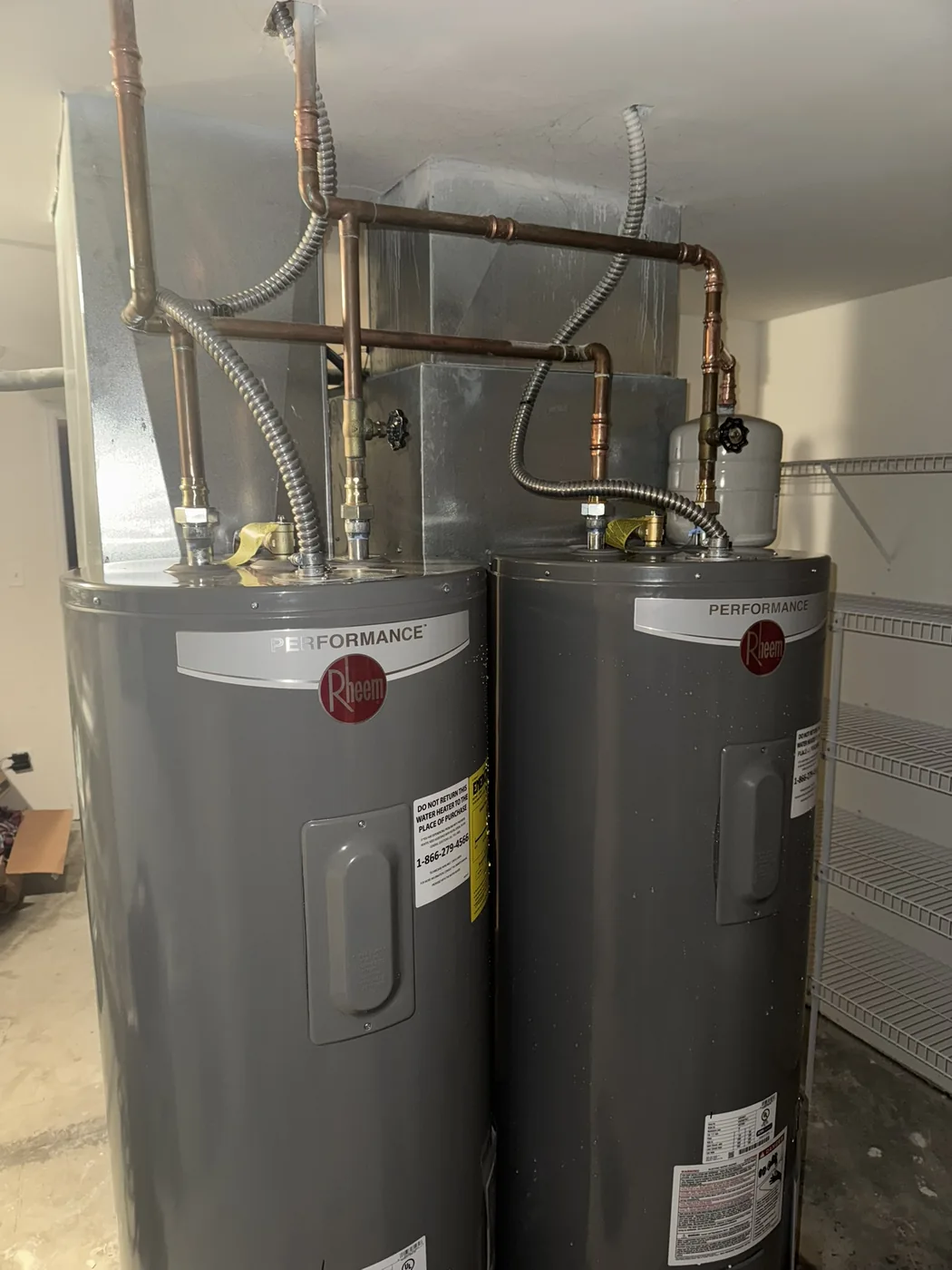
Want to see the kind of work we do? Visit the project gallery to see real Posey Family Plumbing jobs from local homes.
View Our Work →Ask Brian
Have a water heater question? Call or text Brian directly at (314) 620-4809. Even if you are not sure you need a plumber yet, I’m happy to help you understand your options.